11. Final Checks
We’re sure you’re itching to start cutting! Before you begin making chips fly, we recommend going through these final checks to ensure you are set up for success.
Mechanical
- All screws in the table frame have been tightened
- End plates with T-nuts
- End plates to Y rails
- Crossbeams to Y rails
- Clamping nuts on levelling feet
- Legs to frame
- Table is level on all 4 corners of the machine
- All couplers have been fully tightened on both the motor shaft and ballscrew sides
- You may need to unfasten from the ballscrew side to check the motor shaft side
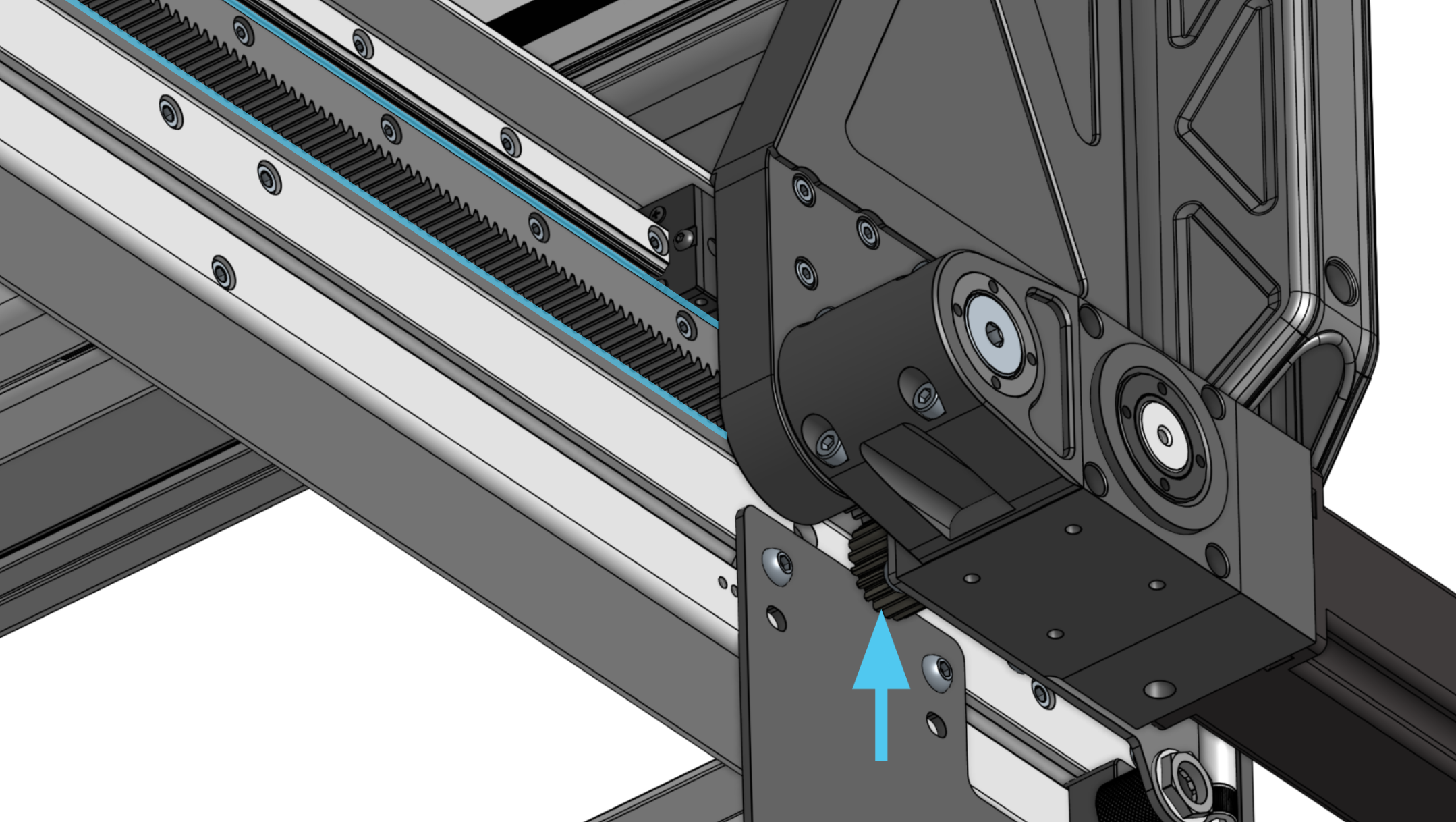
- Grease has been applied to the gear rack
Electrical
- Motor DIP switch positions are correct for each axis
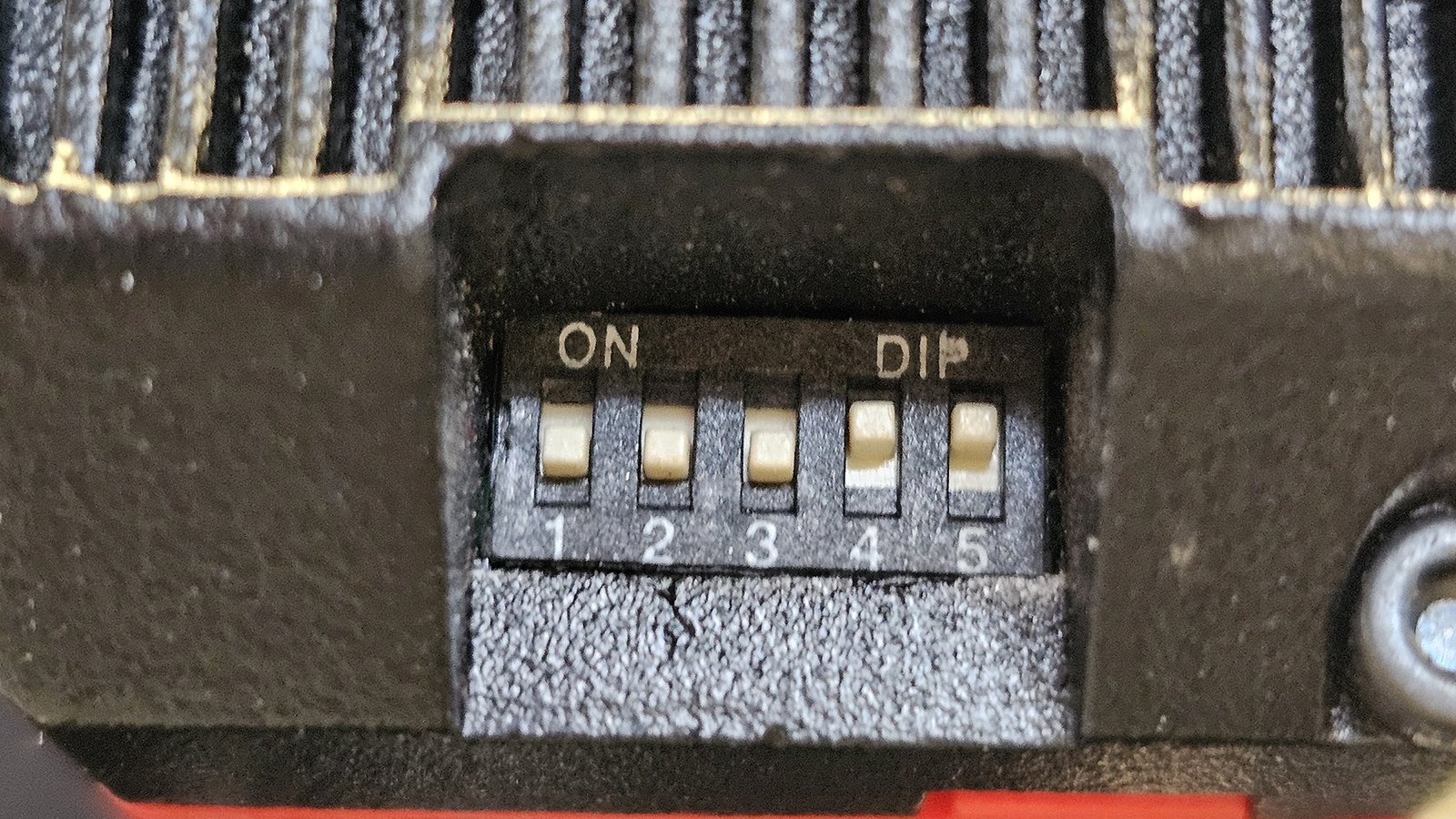
X and Y-axis motor, from 1-5: OFF, OFF, OFF, ON, ON
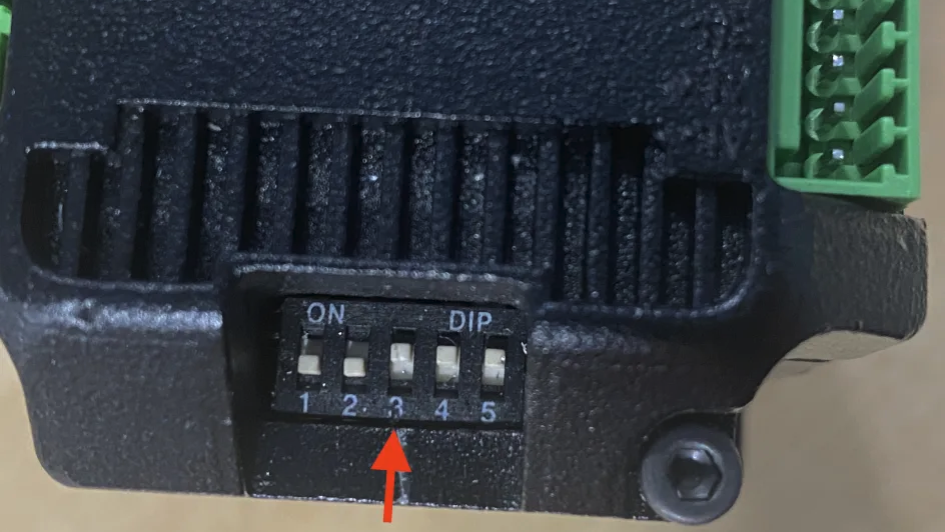
Z-axis motor, from 1-5: OFF, OFF, ON, ON, ON
- Motor cable wires are not frayed or detached from connectors
- If they are simply detached, you can use a small screwdriver to press each orange spring terminal release to insert the wire back in
- You may need to remove the motor cover to check
- Inductive sensors are functional
- Check by putting a metal object near the blue sensor face and see if a small red light triggers on the back
- Spindle VFD is plugged in to a separate circuit from the SLB-EXT control board
Software
- You are using gSender version 1.6.2 or newer
- Older versions of gSender do not support the ATC
- Alarm 10 can be cleared using the “Click to Unlock Machine” on gSender, after pressing and releasing the E-stop button

- Machine can jog in the X, Y and Z directions smoothly using the jog control buttons
- Machine can jog over the table joint without any clunking sounds
- Spindle can spin up to speed, without alarms or errors, using the CW or Forward button

- Machine is able to successfully home without alarms or errors
- Jog the machine away from the X, Y and Z sensors
- Then press “Home”
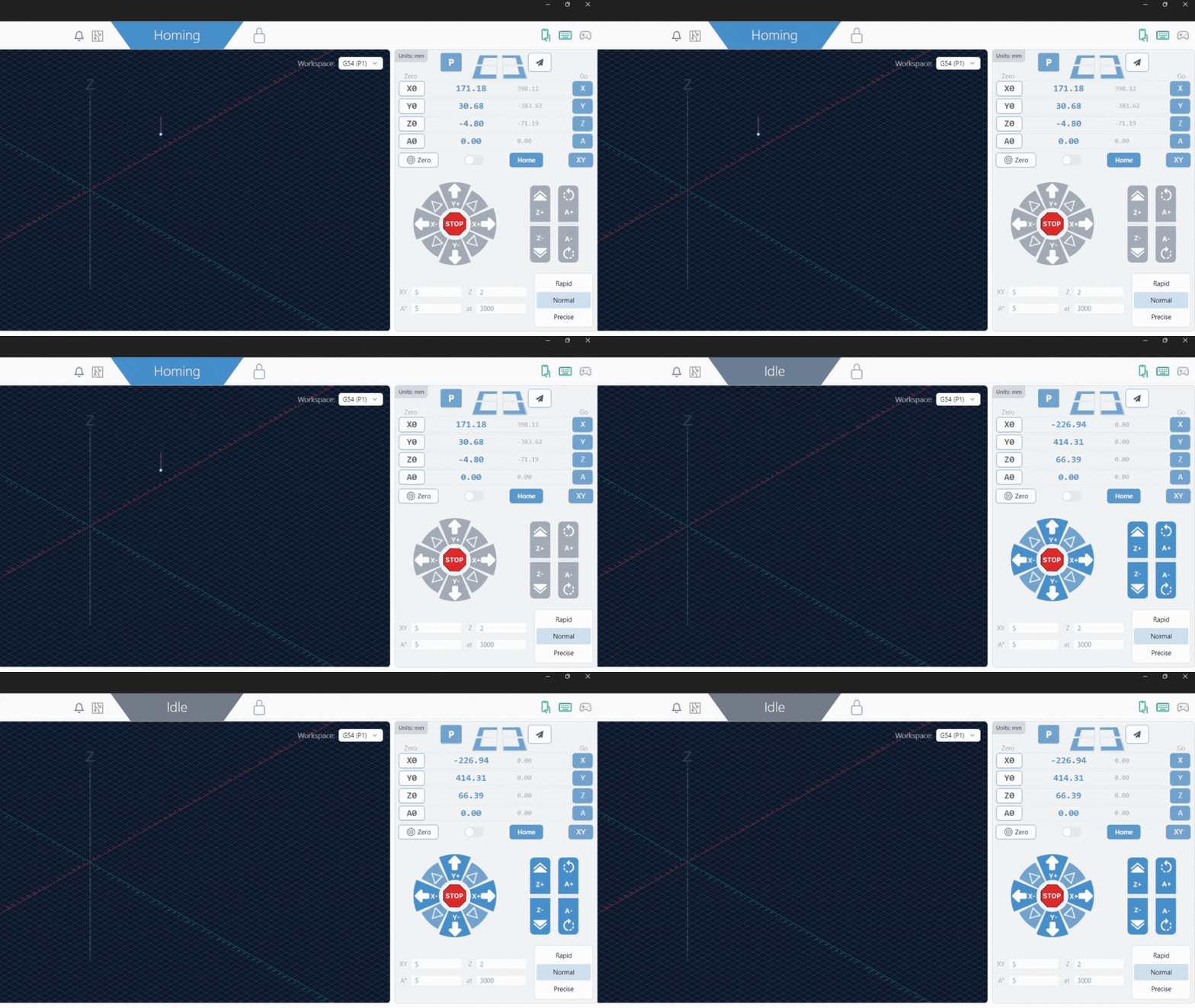
If you have gone through the checks above, then you are ready to start cutting!
Encountered troubles? Check our 4×8 troubleshooting guide.
What’s next?
- Square and/or tram your machine as described in our article
- Bookmark this pre-flight checklist to prepare for each job you do
- Learn how to maintain your AltMill 4×8 to keep it in good condition
- Understand how to use and maintain your spindle
- Follow along this video as Ben goes through the steps to successfully carve a simple, first project.